
The EV Charger Went In Fine – The Panel Didn’t Agree
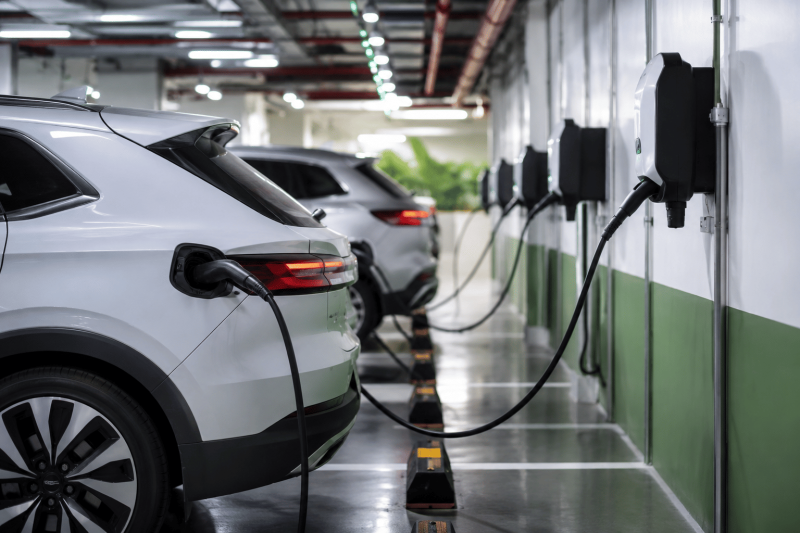
Why does my new EV charger work perfectly but my electrician says the panel can’t support it? Short answer: your charger is behaving itself on the wire, and the paper math that governs your service is behaving itself too, and the two don’t agree.
That disagreement is the whole story of residential EV charging right now. The hardware installs cleanly, the breaker holds, and the car charges overnight without drama.
Then an inspector, a permit reviewer, or a careful electrician runs the numbers on your existing service and tells you the panel was already full before the charger showed up. Both things can be true at once, and the way through isn’t a bigger charger or a louder argument with the electrician.
You have to understand what the calculation is measuring in the first place.
The Charger Isn’t the Problem the Panel Is Solving
A 40-amp Level 2 charger on a 50-amp breaker is a well-behaved load. It pulls what it’s rated to pull, it trips if something goes wrong, and the wire carries it without complaint. On a bench, it’s boring…and that’s the point.
The panel is solving a different problem. It isn’t asking whether this one circuit works. It’s asking whether the sum of everything the house might reasonably demand at once still fits inside the service the utility ran to the meter.
The charger is a new, large, continuous load dropped into a budget drawn up years ago for a different house, with a different oven, a different dryer, no heat pump, and no garage circuit pulling 9.6 kilowatts for hours at a stretch. The breaker test and the service test ask different questions, so they can give different answers.
A licensed electrician’s on-site assessment is what turns that into a real number, which is why EV charger installation pricing ranges as widely as it does.
The Load Calculation Is Where the Disagreement Lives
The specific place the two answers collide is the residential load calculation. For existing homes adding a load, the electrician totals your general lighting, small-appliance circuits, and the nameplate rating of every fixed appliance, applies the demand factors the code allows, and compares the result to your service size. An EV charger enters that math at its full nameplate value as a continuous load, which is a heavy line item. A clear walk-through of the optional method shows how a single 48-amp charger can push a 100-amp service past its calculated limit even when the house barely uses half of that on a normal evening.
That’s why your electrician can look at a working install and still fail it on paper. The code isn’t modeling your Tuesday night. It’s modeling the worst plausible Tuesday night, with the dryer running, the oven preheating, the heat pump in defrost, and the car charging, all at the same moment.
Older Panels Fail the Math Before They Fail in Real Life
Service size is a variable most homeowners rarely think about. Many older homes still run on 100-amp service, while newer construction typically ships with 200 amps, as ENERGY STAR notes. That difference decides whether an EV charger slides into the existing budget or breaks it.
A 100-amp panel that has been running a 1990s all-electric home for thirty years doesn’t suddenly become unsafe when you add a charger. It’s simply out of headroom on paper, and paper is what the permit and the inspection care about. The physical panel can be in fine shape while the number stamped on the main breaker is still the thing standing in your way.
You Have Three Honest Ways Out
Once the calculation disagrees with the install, there are really only three paths that will satisfy both the code and the car:
- Right-size the charger. Dropping from a 48-amp charger to a 32-amp or even 24-amp unit changes the number that goes into the load calculation. Most drivers who plug in overnight never notice the difference in miles added by morning, and the panel math often clears without any other work.
- Add load management. An energy management system or a charger with built-in load sensing watches the rest of the house in real time and throttles the car when other big loads turn on. The code recognizes this as a legitimate way to add an EV charger without expanding the service, because the controlled load can’t push the total past the limit.
- Upgrade the service. If you’re also planning a heat pump, an induction range, or a future second charger, moving from 100 to 200 amps buys headroom for all of it. It’s the biggest ticket of the three, and sometimes the only one that makes sense when more electrification is coming.
When the electrician tells you the charger will install fine but the panel won’t pass on paper, they aren’t being difficult. They’re telling you the two tests gave different answers, and one of the three paths above is now a real decision you get to make rather than something the hardware can sort out on its own.