
Common Myths About Patient Lifts in Home Care
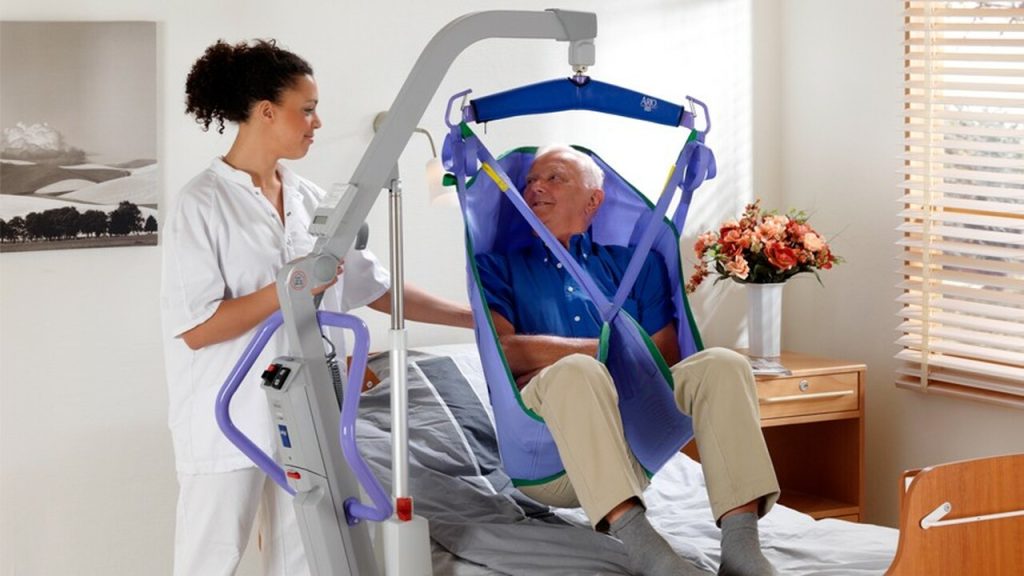
A patient lift can look out of place in a bedroom that has always felt familiar. For an older adult and a family caregiver, considering one may bring up questions about safety, comfort, space, and cost. Advice from friends or a product photo rarely answers all of them.
Some concerns deserve a closer look. Others come from assumptions about who uses lifts and what the equipment can do. A lift is neither a guarantee of safety nor a sign that home care has failed. It is a transfer aid that needs to match the person, the caregiver, and the home.
Understanding these common misconceptions can help families have a more useful conversation with a care professional or equipment supplier.
Myth: patient lifts belong only in hospitals
Patient lifts are used outside hospitals, including in home care. A familiar example is a floor-based lift with a wheeled base, a lifting arm, and a sling that supports the person during a transfer. Some models fold for storage, while others have larger frames that need a dedicated parking spot.
The important question is not whether a lift looks like hospital equipment. It is whether a particular model suits the person’s assessed needs and the places where transfers happen. A bedroom, bathroom, and living room may present very different access problems, even within the same home.
Families can bring photos and measurements to an equipment discussion rather than relying on a description such as “a small bedroom.” Furniture position, doorway width, and clearance beneath the bed can all affect the choice.
A home assessment can also identify whether a floor-based lift is a workable option. Choosing equipment around the actual setting is more useful than assuming every product labeled for home use will fit.
Myth: a strong caregiver makes a lift unnecessary
Caregiver strength is not a substitute for assessing a transfer. Helping someone move involves more than supporting a known amount of weight. Balance, the ability to bear weight, unpredictable movement, and the available space all matter.
A smaller adult who cannot assist with a transfer may still need substantial support. A caregiver may also manage an occasional task differently from a task repeated throughout the day. Judging the situation by body size alone overlooks both people’s needs.
Patient lifts can reduce injury risk when used properly. They also carry risks when used incorrectly, which is why buying one should go hand in hand with assessment and training. The alternative is not simply a choice between “strong enough” and “not strong enough.”
If transfers have become difficult, that is useful information to share with the care team. A discussion can cover the person’s changing abilities, the caregiver’s limitations, and whether equipment or a different care arrangement is appropriate. Needing mechanical assistance is not a personal failure by either person.
Myth: all patient lifts do the same job
Similar-looking frames can have different purposes and operating requirements. Manual hydraulic lifts use a pumping mechanism, while powered models generally use rechargeable batteries to operate the lifting mechanism. Power changes how the lift is operated, but it does not make every powered model suitable for every transfer.
Full-body lifts and sit-to-stand devices are also different categories. A stand-assist option requires an assessment of the person’s abilities and the requirements of the particular device. It should not be selected simply because it appears smaller or less intimidating.
When comparing a hoyer lift for sale, families can use the assessed transfer needs to narrow the options before comparing convenience features. Useful specifications include the rated capacity, lifting range, base dimensions, and approved sling options.
A product name or photograph cannot establish compatibility with a wheelchair, bed, or home layout. Ask the supplier to explain how the proposed model meets the requirements identified in the assessment. That keeps the comparison focused on function rather than a long list of features.
Myth: a powered lift means one caregiver is always enough
A powered lifting mechanism does not establish how many people a transfer requires. It operates one part of the equipment. Preparing for the transfer, supporting the person’s needs, and responding to difficulties still require appropriate staffing and training.
Whether one caregiver or more than one is needed depends on the assessment, the care plan, and the manufacturer’s instructions. An advertisement that emphasizes easy controls cannot answer that question for an individual household.
This distinction matters when relatives are arranging care. A family should not reduce support hours on the assumption that a new powered lift automatically replaces another person’s help. Instead, staffing questions belong in the equipment assessment and training discussion.
Ask who will be trained and whether the planned arrangement works for every regular caregiver, not just the person attending the demonstration. A spouse, visiting aide, and adult child may have different experience and physical limitations. The equipment plan needs to account for the people who will actually use it, including backup caregivers.
Myth: any sling with the right weight rating will work
The sling is a central part of the lifting system, not a generic accessory. Its rated capacity matters, but so do its size, design, attachment system, and approval for use with the specific lift.
The FDA advises that slings must be approved by the lift manufacturer for that lift. No sling is suitable for every patient lift. Two products that look similar in a photograph are not necessarily interchangeable, and a higher weight rating does not resolve a compatibility problem.
Comfort deserves attention too. A sling needs to suit the person’s support needs and intended use. A care professional or knowledgeable supplier can explain the fitting considerations and which approved options are appropriate. A claim that one fabric or shape is always the most comfortable is not enough.
Cleaning and inspection requirements are part of the purchase decision. Families should have the manufacturer’s care instructions and understand how replacement slings are identified. An inexpensive replacement is not a bargain if it is incompatible. Keeping the correct product details available makes later orders less confusing.
Myth: folding equipment will fit anywhere at home
Folded dimensions describe storage, not the space required during use. A lift that fits in a closet may still need more room than expected beside a bed or around a chair. The route between those locations matters as much as the room where the equipment is kept.
Useful questions include whether the base can reach the required position, whether there is sufficient clearance beneath furniture, and whether the frame can turn through the intended route. Flooring and thresholds also belong in the assessment because the equipment must be maneuvered through the real home, not an empty showroom.
Avoid judging fit from doorway width alone. A narrow opening followed by a tight turn can present a different problem from a straight entrance into an open room. Likewise, moving a nightstand may help with one task without solving access to the bathroom.
Ask whether a demonstration or home assessment is available before committing to a purchase. Confirming the working space early is easier than discovering that a storage-friendly model cannot serve the intended transfer locations.
Myth: a lift has to feel frightening or undignified
An older adult may worry about being suspended, losing control, or having personal care become more visible. Those concerns are not an obstacle to dismiss. They are part of choosing and introducing equipment respectfully.
Where possible, include the person in discussions about the lift, the sling, and the routine. Ask what feels most worrying rather than assuming that the machinery itself is the problem. Some people want a clear explanation; others want to know who will be present and how privacy will be protected.
Training can include discussion of communication, comfort, and appropriate privacy alongside equipment operation. A demonstration led by someone qualified to teach use of the device offers an opportunity to ask questions without treating the first necessary transfer as a lesson.
A lift does not guarantee comfort, and reassurance should not override a concern about pain or poor support. Discomfort warrants attention from the care team. Respect comes from listening, explaining, and matching the equipment to the person, not simply from describing a sling as padded or comfortable.
Myth: the purchase price tells the whole story
A price comparison is incomplete if the packages include different things. One quote may include a sling or setup support, while another may cover only the frame. Delivery arrangements, training availability, replacement parts, and service support can change the practical value of an offer.
Ask for an itemized quote and a clear explanation of what happens after delivery. For a powered model, questions about charging requirements, battery replacement, and the model’s emergency features are relevant too. Those features vary, so families need the instructions for the actual equipment rather than general advice from another owner’s lift.
Renting may be worth asking about when needs are temporary or still changing. If considering used equipment, discuss its condition, maintenance history, compatible accessories, and service availability with a qualified supplier. A lower purchase price should not take the place of those checks.
Finally, delivery is not the end of preparation. The FDA emphasizes training, manufacturer instructions, appropriate sling matching, and maintenance inspections. Clarify who will provide instruction and how follow-up questions or repairs will be handled before making a decision.
Turning questions into a workable care plan
The most useful starting point is a description of what has become difficult: which transfers need help, where they happen, who provides care, and what concerns the older adult has. Those details give a care professional and supplier something concrete to assess.
Keep the resulting requirements separate from optional conveniences. Appropriate support, compatible components, sufficient working space, and trained caregivers come before folding mechanisms or other extras.
A well-considered lift purchase is not about finding a machine that promises to solve every challenge. It is about selecting equipment for an assessed need and making sure the people using it have the guidance and support to do so properly.