
Why Yoga Is the Perfect Complement to Heavy Strength Training
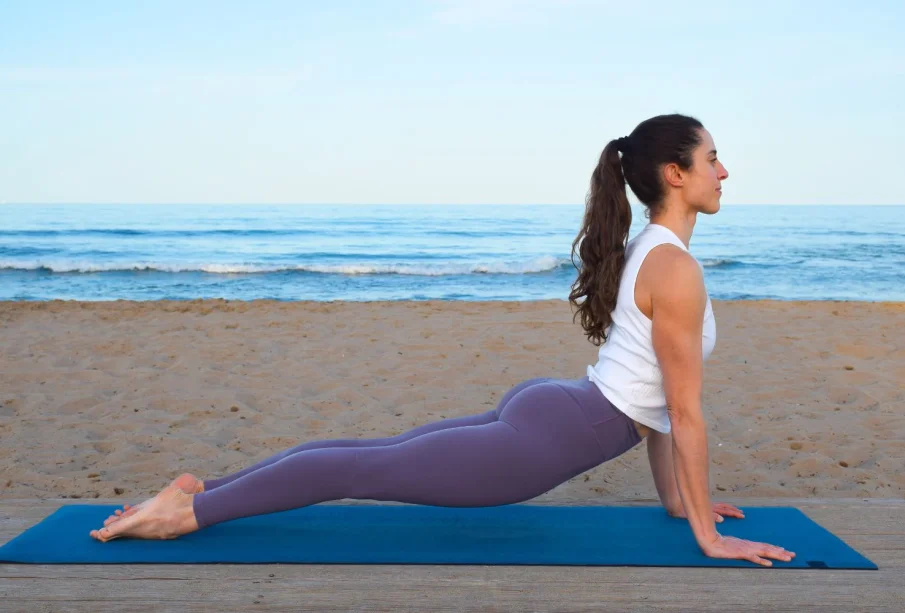
The modern fitness landscape often encourages specialization. Powerlifters, weightlifters, and bodybuilders focus intensely on shifting maximum loads, tracking progressive overload, and forcing muscular hypertrophy. Conversely, dedicated yogis spend hours refining flexibility, balance, and meditative respiratory control. This cultural division creates an unspoken assumption that these two training styles are mutually exclusive. Heavy lifters sometimes view yoga as a passive activity that lacks the intensity required to build true physical resilience, while yoga practitioners might see heavy resistance training as a rigid practice that destroys natural bodily suppleness.
Restoring Active Joint Mobility
Heavy strength training requires muscles to contract forcefully against substantial external loads. Over months and years, this continuous mechanical tension causes adaptions in your muscle fibers and surrounding fascia. While these adaptations are necessary to stabilize your joints during heavy squats, deadlifts, and overhead presses, they frequently result in a gradual loss of passive and active range of motion. Tight hip flexors, restricted shoulders, and rigid ankles can slowly alter your movement mechanics.
Yoga addresses this structural restriction by focusing on active mobility rather than passive flexibility. Rather than simply pulling a cold muscle into a prolonged stretch, yoga poses require the simultaneous contraction of opposing muscle groups to hold a specific shape. This method stimulates reciprocal inhibition, a neurological mechanism where contracting one muscle automatically signals the opposing muscle group to relax and lengthen.
By taking your joints through multi-planar patterns that go far beyond the straight up and down tracks of standard barbell lifts, yoga helps clear out localized fascial restrictions. This intentional lengthening ensures that your joints maintain their optimal movement arcs, allowing you to achieve deeper squat depths, a cleaner front rack position, and a more locked-in overhead press configuration without compensation.
Enhancing Core Stability and Proprioception
True physical power depends on your central nervous system’s ability to stabilize your spine and cleanly transfer energy through your kinetic chain. A lifter can have incredibly powerful legs, but if their core compromises under a heavy load, that energy leaks away, increasing injury risk and reducing absolute lifting potential.
While compound movements like heavy deadlifts build significant isometric core strength, they rarely challenge the deeper rotational and multi-directional stabilizers of the trunk. Yoga poses require consistent, low-level isometric contractions from the deep abdominal muscles, such as the transversus abdominis, the internal obliques, and the pelvic floor. Poses like the side plank variations, crescent lunge twists, and balancing shapes force these deep muscle layers to work together to hold balance on uneven foundations.
Furthermore, the deliberate transitions between poses significantly enhance proprioception, which is your brain’s internal map of where your limbs are positioned in space. Developing a highly refined sense of proprioception allows you to detect tiny errors in your lifting form mid-rep. If a heavy squat begins to drift forward onto your toes, a high level of kinetic awareness allows your brain to immediately correct your positioning, saving a missed lift and avoiding unexpected spinal shear.
Accelerating Recovery Through Autonomic Balance
To understand how yoga directly drives muscle hypertrophy and strength gains, you must look at how the autonomic nervous system functions. Heavy weightlifting places an immense physical demand on your body, triggering a powerful sympathetic nervous system response. This fight or flight mode elevates your heart rate, floods your bloodstream with cortisol, spikes your blood pressure, and directs all physical resources toward immediate muscular survival.
While this acute stress response is completely necessary to hoist a heavy barbell, your muscles do not actually grow while you are inside the gym. Hypertrophy, tissue repair, and glycogen replenishment occur only when your body transitions out of the sympathetic state and settles deep into the parasympathetic nervous system mode, often called the rest and digest state.
Many dedicated lifters struggle with chronic overtraining because they remain stuck in a low-grade sympathetic state long after their workout ends. A slow, breath-centric yoga practice acts as a conscious switch that resets your nervous system. By utilizing deep diaphragmatic breathing where your exhalations are intentionally longer than your inhalations, you stimulate the vagus nerve. This activation immediately slows your heart rate, reduces circulating stress hormones, and shifts your internal physiology into an optimal state for cellular repair and structural recovery.
Bulletproofing Vulnerable Kinetic Junctions
Heavy lifting relies heavily on a few prime mover muscle groups: the quadriceps, glutes, hamstrings, latissimus dorsi, and pectorals. When these large muscle groups become exceptionally strong, they can easily overpower the smaller, deep stabilizing muscles that protect your vulnerable joints.
Yoga addresses these common muscular imbalances by forcing your body to manage its own weight across unusual angles. It targets vital stabilizing networks that are often overlooked in a standard weight room:
-
The Gluteus Medius and Minimus: These lateral hip stabilizers are heavily activated during single-leg balancing postures like Warrior Three or Half Moon pose, preventing your knees from collapsing inward during heavy squats.
-
The Rotator Cuff Matrix: Dynamic yoga movements like downward-facing dog to upward-facing dog transitions build excellent endurance in the infraspinatus, supraspinatus, and teres minor, keeping your shoulder joint stable during heavy bench presses.
-
The Feet and Ankles: Operating barefoot on a yoga mat forces the tiny intrinsic muscles of your feet to work continuously to maintain balance. Building a strong, responsive arch creates a more stable, grounded foundation when anchoring yourself to the gym floor for a heavy pull.
Frequently Asked Questions
Will practicing yoga cause a noticeable loss of absolute muscle mass or strength?
Practicing yoga will not cause a loss of muscle mass or physical strength as long as you maintain your caloric baseline and continue your heavy resistance training. Yoga is an isometric, bodyweight discipline that does not induce the severe muscular damage or protein degradation associated with high-volume cardiovascular endurance work. Instead, by improving your recovery times and expanding your active range of motion, yoga allows you to train your primary lifts with greater frequency, better mechanical efficiency, and lower injury interference, ultimately supporting long-term strength accumulation.
When is the most effective time to schedule yoga around a heavy lifting program?
The ideal timing depends entirely on the style of yoga you choose to practice. A fast-paced, intense vinyasa power class should be treated as a standalone workout and scheduled on an off-day or several hours apart from your lifting sessions to avoid premature muscular fatigue. Conversely, a gentle, restorative yin yoga session that focuses on long, passive holds and deep breathing is best utilized immediately after a heavy lifting session or right before bed to calm your nervous system and initiate the recovery cycle.
Do I need to be flexible to start using yoga as a lifter?
Saying you are too stiff to practice yoga is equivalent to saying you are too weak to lift weights. Increased mobility is the outcome of the practice, not a prerequisite for entry. If your muscles are exceptionally tight from years of heavy barbell training, you stand to gain far more from the practice than someone who is naturally hypermobile. You can easily modify any pose using yoga blocks, straps, or altered body positions to match your current structural capabilities safely.
How often should a strength athlete practice yoga to see real benefits?
You do not need to spend hours on a mat daily to experience the benefits of yoga. For most strength athletes, integrating two short sessions of fifteen to twenty minutes per week, or one longer session of forty-five minutes on an active recovery day, is more than enough to create lasting changes in joint mobility, core stability, and nervous system balance without overtaxing your recovery capacity.
Can yoga help alleviate chronic lower back pain caused by heavy deadlifts?
Yoga can be incredibly effective for managing lifting-related lower back discomfort, provided the movements are executed with proper alignment. Chronic lower back pain in lifters is frequently not a spinal problem, but a consequence of severe tightness in the hamstrings and hip flexors, which pulls the pelvis out of alignment and forces the lumbar spine to overwork. Yoga poses that gently open the hips and stretch the posterior chain can relieve this mechanical pull on your lower back. However, if you have an acute disc injury, you should avoid deep forward folds and consult a medical professional before starting.
Why does yoga emphasize nasal breathing, and how does it help weightlifting?
Yoga focuses on consistent nasal breathing because breathing through your nose filters air, optimizes oxygen absorption, and directly stimulates the parasympathetic nervous system through vagal nerve path pathways. In contrast, heavy lifting requires the Valsalva maneuver, which involves taking a deep breath and holding it against a closed airway to create immense intra-abdominal pressure to protect your spine. Practicing nasal breathing during yoga expands your vital lung capacity, improves diaphragm control, and enhances your ability to lower your heart rate quickly between heavy, exhausting sets in the weight room.
How can a lifter avoid joint injury when practicing advanced yoga poses?
Lifters must approach yoga with a focus on active control rather than trying to force themselves into extreme positions. Because strength athletes have highly developed, powerful nervous systems, they can sometimes use brute force to push their bodies into deep positions before their connective tissues are ready. To avoid injury, listen to your body’s feedback, avoid any sharp or localized joint pain, and use props like blocks to support your weight. Focus on creating stable, active tension within the pose rather than chasing a specific visual shape.