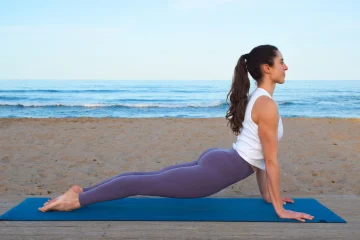
How to Use Yoga for Targeted Relief of Chronic Lower Back Pain

Chronic lower back pain is a pervasive health issue that disrupts daily living, alters mood, and limits mobility for millions of individuals. Sitting for hours at a desk, maintaining poor posture, experiencing repetitive physical strain, or managing the long-term aftermath of an old injury can cause the muscles and connective tissues surrounding the lower spine to lock up. This localized tension often leads to a persistent, draining ache. Traditional medical responses frequently rely on pharmaceutical pain relievers or muscle relaxants, which offer temporary comfort but fail to resolve the underlying physical imbalances causing the distress.
Yoga presents a compelling, movement-based path to long-term management and relief. Rather than viewing the lower back as an isolated structural unit, yoga approaches the body as an interconnected kinetic network. By focusing on targeted stretching, active core stabilization, and intentional breath control, a structured yoga practice can decompress the lumbar spine, lengthen tight surrounding muscles, and re-educate the body to move with proper alignment.
The Mechanics of Lower Back Tension
To use yoga effectively for pain relief, it is essential to understand why the lower back becomes a repository for chronic discomfort. The lumbar spine relies on a delicate balance of muscular strength and flexibility across the entire torso and pelvis. When specific muscle groups become weak or chronically short, this structural balance collapses.
Two primary areas frequently drive lower back pain:
-
The Hip Flexors and Quadriceps: Prolonged sitting keeps the hips in a constant state of flexion. Over time, the psoas and iliacus muscles shorten. Because the psoas muscle connects the thigh bone directly to the lumbar vertebrae, tight hip flexors pull the pelvis forward, creating an exaggerated arch in the lower back that compresses the spinal joints.
-
The Hamstrings: Tightness along the back of the thighs limits the natural rotation of the pelvis when bending forward. When you reach down to pick something up with rigid hamstrings, the pelvis remains locked, forcing the delicate vertebrae of the lower back to bend and bear the mechanical load alone.
Yoga works by target-treating these neighboring regions. By lengthening the hips and hamstrings while simultaneously strengthening the deep abdominal wall, yoga removes the uneven mechanical forces that pull the lower back out of its natural, pain-free alignment.
Core Postures for Decompressing the Lumbar Region
When addressing chronic discomfort, the goal is not to perform advanced, hyper-flexible shapes. Instead, the focus must be on gentle, accessible postures that create space between the vertebrae and relax hyperactive muscle fibers.
Cat-Cow Stretch (Marjaryasana-Bitilasana)
This gentle, flowing movement synchronizes with the breath to mobilize the entire spinal column. Moving between a gentle arch and a rounded spine stimulates the flow of synovial fluid around the spinal joints, which lubricates the vertebrae and eases morning stiffness. It also allows you to track your spinal mobility in a safe, non-weight-bearing position.
Child’s Pose (Balasana)
Child’s pose is a foundational resting shape that provides a passive stretch for the lower back and gluteal muscles. By folding your torso over your thighs and reaching your arms forward, you allow the gravity-induced pull on your tailbone to decompress the lumbar spine. This position gently opens the lower back tissues, encouraging tight muscles to let go of their protective gripping.
Sphinx Pose (Salamba Bhujangasana)
Many people with lower back pain instinctively avoid backends, but gentle extension is often exactly what a compressed spine needs. Lying on your stomach and propping yourself up on your forearms allows the lower back to settle into a mild, passive arch. This posture counteracts the constant forward slouch of modern desk work, helping to shift pressure away from the anterior spinal discs.
Two-Knee Spinal Twist (Supta Matsyendrasana)
Reclining twists help restore the natural rotational range of motion of the spine. Lying flat on your back and letting your knees fall gently to one side creates a passive stretch through the lower back, hips, and outer glutes. This rotation helps wring out tension along the deep stabilizing muscles of the spine, such as the multifidus, promoting increased blood flow and localized relaxation.
Building Core Stability to Prevent Future Discomfort
While stretching provides immediate relief from tightness, lasting freedom from back pain requires building a supportive muscular corset around the spine. A flexible spine without stability remains highly vulnerable to re-injury.
Yoga develops this necessary stability by targeting the deep, stabilizing layers of the core, rather than just the superficial abdominal muscles. Postures like Bird-Dog (Parsva Balasana) force the body to maintain a neutral, stable spine while limbs are moving, teaching the brain how to coordinate core recruitment during daily tasks.
Similarly, holding Bridge Pose (Setu Bandha Sarvangasana) activates the gluteal muscles and hamstrings while opening the front of the hips. Strong glutes are essential for a healthy back, as they take over the heavy lifting duties during walking, standing, and lifting, preventing the lower back from overworking to compensate for weak hip extensors.
The Role of Mindfulness and Breath in Pain Regulation
Chronic pain is not purely a structural issue; it is also a neurological phenomenon. When a person lives with chronic discomfort, their central nervous system can become hypersensitive, entering a continuous loop of protective muscle guarding. This means the brain perceives minor movements as major threats, signaling the back muscles to seize up in anticipation of pain.
Yoga interrupts this neurological loop through conscious diaphragmatic breathing, known as Pranayama. Deep, controlled nasal breathing activates the parasympathetic nervous system, which signals the brain that the body is safe. When the nervous system shifts out of a stressed, defensive state, the background tension in the lower back drops naturally, breaking the cycle of stress-induced muscle spasms.
Guidelines for a Safe Practice
Practicing yoga for back pain requires a mindful, non-competitive approach. To ensure your practice supports your recovery rather than aggravating your symptoms, adhere to the following principles:
-
Avoid Aggressive Forward Folds: Forcing your chest toward your shins with straight legs can put immense pressure on the lumbar discs. Always maintain a generous bend in your knees during forward folds to keep the stretch centered in your hamstrings and glutes rather than your lower back.
-
Listen to Sharp Signals: There is a clear distinction between the dull ache of a stretching muscle and the sharp, shooting signal of a compressed nerve or strained ligament. If a posture triggers sharp pain, numbness, or tingling down your legs, back out of the shape immediately.
-
Utilize Supportive Props: Do not hesitate to use yoga blocks, straps, or thick blankets. Placing a block under your hand or a blanket under your knees can reduce stress on your joints, allowing your muscles to relax fully into the shape without straining.
Frequently Asked Questions
Can I practice yoga if I have a diagnosed herniated or bulging disc?
You can practice yoga with a herniated or bulging disc, but you must modify your practice with extreme caution and seek approval from your medical provider first. When a disc is herniated, deep forward bending or aggressive spinal twists can push the disc material further against your spinal nerves, worsening your symptoms. Focus on gentle spinal extensions like Sphinx pose, stabilization movements like Bird-Dog, and poses that keep your spine in a neutral alignment. Avoid any movements that cause pain to travel down your legs.
Is it normal to feel sore in the lower back after a yoga session?
Feeling a mild, generalized muscular soreness the day after practicing yoga is normal, especially if you are waking up muscles that have been inactive for a long time. This is similar to the standard muscle soreness experienced after a light workout. However, if you experience sharp, localized pain, increased stiffness that makes it difficult to stand up straight, or shooting sensations, it indicates that you likely overstretched or overloaded your spinal joints, and you should scale back your intensity.
How long do I need to hold a yoga pose to get relief from back tightness?
To experience a physical release in tight connective tissues, aim to hold passive, restorative poses like Child’s pose or a reclining twist for at least one to three minutes. The body’s stretch reflex naturally resists changes in muscle length for the first thirty seconds. By holding a supported posture comfortably for a few minutes while maintaining deep, slow breathing, you allow the nervous system to relax, signaling the deeper fascial layers to let go of their tension safely.
Why does my lower back ache specifically during standing balance poses?
Aching during standing balance postures, such as Tree Pose or Warrior Two, usually indicates that your deep core stabilizers and gluteal muscles are fatiguing quickly, forcing your lower back muscles to work overtime to keep you upright. If your core is weak, your pelvis can tilt forward during these shapes, compressing your lumbar spine. To correct this, focus on lightly drawing your belly button toward your spine and tucking your tailbone slightly to maintain a neutral pelvic position during standing shapes.
Should I practice yoga when my back is in an acute, painful spasm?
When your back is in an acute, severe spasm, active yoga postures are not recommended. A spasm is your body’s emergency braking system designed to protect the spine from perceived injury, and forcing movement during this phase can worsen the inflammation. Instead, focus on strict rest, gentle ice or heat applications, and passive restorative positions where your back is fully supported, such as lying flat on the floor with your calves resting on a chair at a ninety-degree angle. Once the acute spasm subsides into a dull ache, you can gradually reintroduce gentle mobility movements like Cat-Cow.
How can tight calves and ankles contribute to lower back pain?
The human body operates as a continuous kinetic chain from the feet up to the head. If your calves and ankles are exceptionally tight, they restrict the natural forward tracking of your shins when you squat, bend, or walk. To compensate for this lack of mobility at the ground level, your body alters your movement mechanics upstream, forcing your hips and lower back to bend excessively to complete basic movements. Stretching your calves and ankles during yoga restores proper lower-body mechanics, reducing the compensatory workload placed on your lumbar spine.
Is it better to practice yoga in the morning or evening for back pain?
Both times offer distinct physiological benefits, so the best choice depends on your daily symptoms. Morning practice is highly effective for clearing out the fluid-induced stiffness that accumulates in the spinal discs overnight, helping to lubricate your joints for the day ahead. Evening practice is ideal for unwinding the structural compression and muscular tension that builds up from hours of standing or sitting at work, allowing your nervous system to calm down before sleep.